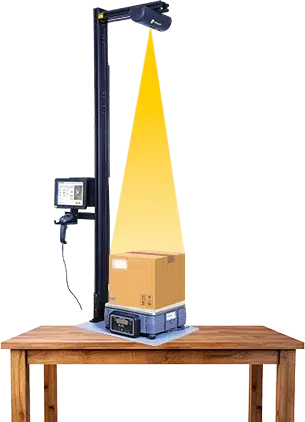
A global 3PL had several inbound stations where parcel dimensions were still taken by hand. As volumes grew, the same problem kept showing up in the records. One station measured a parcel one way, another station recorded it slightly differently, and irregular parcels made the gap more obvious.
The company moved from a manual dimensioning process to 30 automated Parcel Ultima units, with the data connected to My Hub Plus through API-based sync.
The manpower needed for dimensioning came down from 6 operators to 2. That is the main shift: 66% less manpower for inbound dimensioning, with fewer manual entries behind the parcel records.
Where was the inbound process losing control?
Inbound parcels were measured manually, uploaded into My Hub Plus, and checked through human validation steps.
That process created avoidable variation. One operator measured differently from another. Irregular parcels were harder to capture consistently. During high-volume receiving periods, manual entry added more room for delay and correction.
The issue showed up in three practical areas:
- Inventory master records were not always reliable
- Vendor-declared dimensions were harder to compare against received measurements
- Internal inbound costing depended on inconsistent parcel data
The problem was not only the time spent measuring. It was the quality of the record created at receiving.
Why did manual measurement stop fitting the workflow?
Manual measurement became harder to manage as parcel volume, parcel type, and station count increased.
A tape-based process depends on how the parcel is placed, who measures it, and how the value is entered into the system. Across several stations, those small differences become harder to control.
For this logistics provider, inbound dimensions were used beyond receiving. The data supported storage planning, cost allocation, handling charges, and vendor reconciliation. When the measurement record was inconsistent, those workflows had to work around the same data issue.
What changed at the receiving station?
The new process had three clear steps:
- The parcel barcode was scanned at the receiving station.
- Parcel Ultima captured the parcel dimensions automatically.
- The measurement data was sent to My Hub Plus in real time.
Parcel Ultima captured dimensions for regular and irregular parcels without a manual upload step after measurement.
This gave each station the same measurement process. Instead of depending on manual capture and later correction, inbound operations had a connected path from parcel scan to system record.
What changed before and after automation?
The most visible improvement was labor reduction. Dimensioning manpower dropped from 6 operators to 2.
The operational improvement was just as important. Receiving stations followed the same process, parcel records became more consistent, and vendor dimension mismatches were easier to review with system-captured data.
Why did this matter for the business?
Inbound measurement is one of the first data capture points in the warehouse workflow. If that record is inconsistent, the same issue follows into storage, costing, and vendor review.
By automating dimension capture and syncing data directly into My Hub Plus, the logistics provider created a more controlled inbound process across 30 stations.
For operations still measuring inbound parcels manually, the same pressure often appears as labor dependency, repeated validation, inconsistent system records, and slower cost review.
Talk to the dimensioning experts
Explore how automated parcel dimensioning fits into your inbound workflow.
Talk to our dimensioning experts and see how a similar setup would fit your warehouse.
What do our customers say?