
What are freight and pallet dimensioning systems?
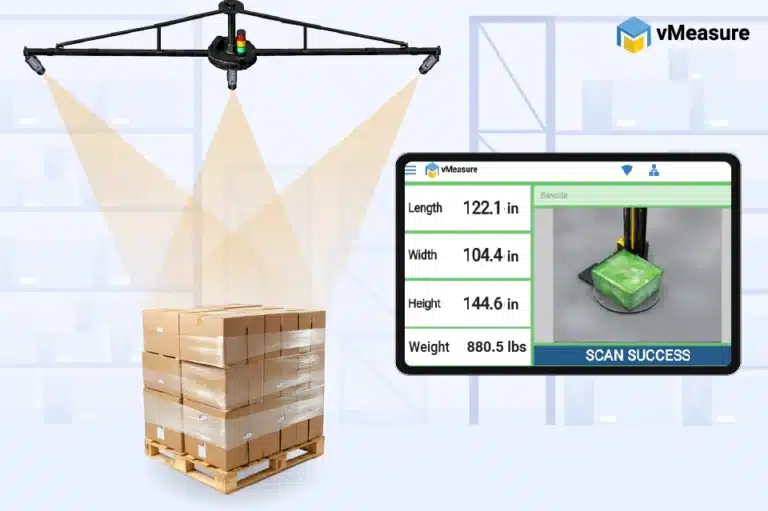
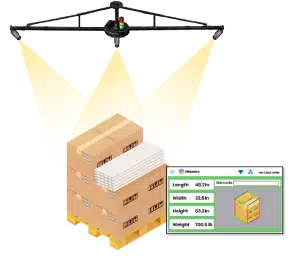
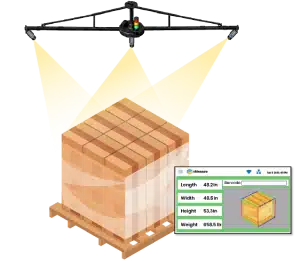
Freight and pallet dimensioning systems are automated measurement setup that records length, width, height, weight, and supporting shipment data for loads moving through a warehouse freight flow.
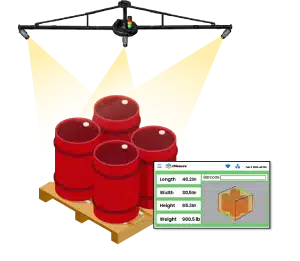
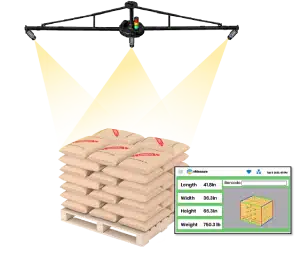
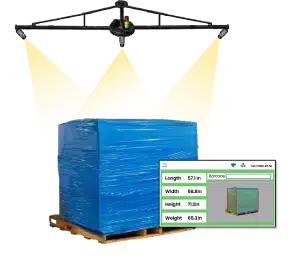
These pallet dimensioning systems are used when one warehouse flow needs to measure more than standard pallets. The same measurement process supports palletized freight, wrapped pallets, crates, overhanging loads, oversized freight, and irregular cargo.
The output is a structured dimension and weight record linked to the load. That record usually includes image proof, timestamp, shipment ID, scan history, and data fields needed for warehouse, shipping, billing, or carrier review workflows.
vMeasure pallet dimensioning systems capture pallet dimensions, weight, and image records, then connect that data with warehouse and shipping systems for freight workflows involving palletized loads and mixed warehouse freight.
What are freight and pallet dimensioning systems built to measure?
Freight and pallet dimensioning systems are built to measure the full outside profile of a load before it moves into staging, dispatch, freight billing, or carrier handoff.
Buyer’s evaluation checklist
| Load type | What the system should measure |
|---|---|
|
Standard palletized freight |
Full pallet footprint, height, and actual weight |
|
Wrapped pallets |
Final outside profile after stretch wrap |
|
Crated freight |
Outer crate length, width, height, and weight |
|
Irregular cargo |
Widest, tallest, and longest visible points |
|
Overhanging pallets |
Freight edge beyond the pallet base |
|
Oversized freight |
Full occupied space in the warehouse flow |
Why does the outside freight profile matter?
The outside freight profile is the measurement that affects staging, trailer planning, dispatch, rating, and carrier review.
A pallet base does not always represent the real freight footprint. Stretch wrap, corner boards, bulging cartons, overhang, and uneven stacking change the final profile. If pallet dimensioning systems miss those changes, the warehouse data no longer matches the physical freight.
How do different load shapes create measurement gaps?
- Overhang recorded as the pallet base
- Height rounded because the load is hard to reach
- Wrapped pallet dimensions taken before wrapping
- Crated freight measured from the easiest visible edge
- Irregular cargo estimated instead of measured
- Weight stored separately from dimensions
- Image proof missing from the freight record
Where do mixed-load errors show up later?
| Error source | Where it appears later |
|---|---|
|
Missed overhang |
Carrier remeasurement or billing adjustment |
|
Pre-wrap measurement |
Dimension mismatch after dispatch |
|
Manual rounding |
Freight rating or DIM weight mismatch |
|
Missing image record |
Weak support during carrier review |
|
Separate weight and dimension records |
Billing and shipment data gaps |
See how vMeasure creates one measurement workflow for mixed freight.
What should the output look like for every scan?
| Data field | Why it matters |
|---|---|
|
Length, width, height |
Shows the space the load occupies |
|
Actual weight |
Supports rating, planning, and billing workflows |
|
Image record |
Shows freight condition, wrapping, overhang, or irregular shape |
|
Shipment ID |
Links the measurement to the correct movement |
|
Timestamp |
Shows when the measurement happened |
|
Scan history |
Supports later review |
|
Export-ready data |
Moves the record into connected systems |
Should mixed freight be measured before staging, after wrapping, or before outbound?
| Measurement point | Best fit |
|---|---|
|
Receiving |
Inbound freight validation and supplier record checks |
|
After wrapping |
Final pallet profile capture |
|
Staging |
Mixed outbound load review |
|
Floor scale area |
Dimension and weight capture in one workflow |
|
Dispatch |
Final record before carrier handoff |
|
Cross-dock |
Fast freight movement with limited dwell time |
Why does post-wrap measurement matter for wrapped pallets and overhangs?
How does one measurement workflow capture freight and pallet data?
What happens when a load enters the measurement zone?
- Scan the barcode or enter the shipment ID.
- Place the load in the scan area as it will move forward.
- Capture length, width, height, and weight.
- Attach image proof to the measurement.
- Save the record with scan time and measurement history.
- Move the same record into the warehouse, shipping, billing, or reporting workflow.
Why should image records be attached to mixed-load measurements?
- A pallet has overhang
- Freight is wrapped unevenly
- A crate has protruding edges
- Irregular cargo does not fit a clean footprint
- A carrier challenges recorded dimensions
- Internal staff need to review what was scanned
Need One Workflow for Mixed Freight?
How do mixed-load measurements affect freight rating and DIM weight?
Where does billing exposure begin?
Billing exposure begins when the warehouse record does not match the freight profile that reaches the carrier.
| Measurement issue | Billing risk |
|---|---|
|
Pre-wrap pallet measurement |
Final dimensions differ from the shipment record |
|
Missed overhang |
Load footprint is understated |
|
Estimated irregular cargo |
Record does not match the physical freight |
|
Missing weight link |
DIM weight and actual weight review becomes harder |
|
No image record |
Dispute support becomes weaker |
For mixed warehouse loads, the goal is not only to measure freight correctly. The goal is to create a record that reflects the actual freight profile before billing, dispatch, or carrier review begins.
How should warehouses decide between a fixed scan point and mobile dimensioning?
When does a fixed scan point fit mixed freight workflows?
- Outbound dock
- Stretch wrap area
- Floor scale location
- Staging lane
- Dispatch checkpoint
- Cross-dock flow
When does mobile dimensioning fit irregular or hard-to-move cargo?
| Setup type | Best fit | Watch point |
|---|---|---|
|
Fixed scan point |
Repeatable freight flow through a dock, scale, wrap, or dispatch area |
Works best when loads pass through the same point |
|
Mobile dimensioning |
Oversized, irregular, or hard-to-move cargo |
Needs process control so records stay consistent |
|
Combined workflow |
Warehouses with repeatable pallet flow and irregular cargo |
Requires one record format across both workflows |
How should warehouses choose one freight and pallet dimensioning systems?
What should be checked in the freight mix first?
Start with the load types that move every day.
| Evaluation point | What to check |
|---|---|
|
Palletized freight ratio |
How much volume moves on pallets |
|
Wrapped pallet frequency |
How often the final profile changes after wrapping |
|
Irregular cargo volume |
How often freight has uneven shape or protrusions |
|
Overhang frequency |
How often freight extends beyond the pallet base |
|
Hard-to-move freight |
How often freight needs measurement where it sits |
|
Data requirements |
Which systems need dimensions, weight, images, and shipment IDs |
Where do vmeasure freight and pallet dimensioning systems fit in a mixed warehouse workflow?
- One measurement workflow for palletized freight and mixed loads
- Image-backed records for wrapped pallets, crates, and irregular cargo
- Dimension and weight records linked to shipment data
- Consistent records for billing, dispatch, carrier review, and reporting
- A measurement setup that matches warehouse layout, freight mix, and load range
Frequently asked questions
1. Where should mixed freight be measured in the warehouse flow?
2. What records should a mixed-load dimensioning setup capture?
3. When does a fixed scan point make sense for mixed warehouse loads?
4. How do vMeasure freight and pallet dimensioning systems capture dimensions, weight, and image proof for mixed loads?
Talk to the dimensioning experts
What do our customers say?

Bargain Book Stores

Holisol

Pidge